Not Ours to Keep
¹⁰ Na época da colheita, ele enviou um servo aos lavradores, para que lhe entregassem parte do fruto da vinha. Mas os lavradores o espancaram e o mandaram embora de mãos vazias.
¹¹ Ele mandou outro servo, mas a esse também espancaram e o trataram de maneira humilhante, mandando-o embora de mãos vazias.
¹² Enviou ainda um terceiro, e eles o feriram e o expulsaram da vinha.
¹³ "Então o proprietário da vinha disse: ‘Que farei? Mandarei meu filho amado; quem sabe o respeitarão’.
¹⁴ "Mas quando os lavradores o viram, combinaram entre si dizendo: ‘Este é o herdeiro. Vamos matá-lo, e a herança será nossa’.
¹⁵ Assim, lançaram-no fora da vinha e o mataram. "O que lhes fará então o dono da vinha?
¹⁶ Virá, matará aqueles lavradores e dará a vinha a outros". Quando o povo ouviu isso, disse: "Que isso nunca aconteça! "
In a world of personal branding, curated feeds, and constant pressure to build something that feels like ours, it is easy to start living as if our life belongs only to us. We guard our time, our plans, and our desires so tightly that any claim from God can feel like an interruption.
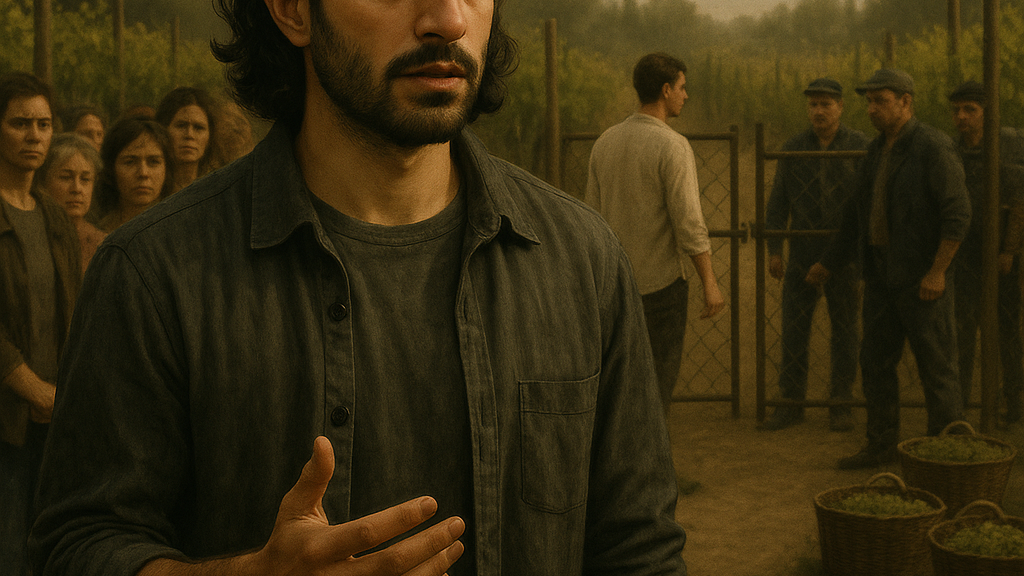
This story exposes that illusion. The vineyard was planted by the owner, not by the tenants, and the fruit never stopped belonging to him. Yet the tenants responded to patience with resistance. Again and again, the owner sent servants, and again and again they were rejected, beaten, and humiliated. Then came the beloved son. He was not merely another messenger in a long line; he carried the owner's authority and heart. To kill him was the tenants' final attempt to keep for themselves what was never theirs.
Jesus is not only warning about obvious rebellion. He is uncovering a quieter sin that still lives in us: receiving God's gifts while resisting God's rule. We enjoy the vineyard but resist the Owner. We want the benefits of grace without the surrender of obedience. The sobering edge of this passage is that God's patience is real, but it is not permission. The hopeful edge is that even this warning is mercy, because God speaks before he judges. The question beneath the parable is tender and piercing at once: when the Son comes near, will we receive him with reverence, or treat him as a threat to our control?
There is freedom in remembering that we are stewards, not owners. Your work, your influence, your relationships, your body, your future: none of these are safer in your hands than in God's. To honor the Son is not to lose life, but to be restored to the truth of who life belongs to.
Exercise
Choose one area you tend to control as if it were fully yours—your schedule, your money, or your phone use. Write this sentence somewhere visible today: "This has been entrusted to me, not owned by me." Then make one concrete decision that returns fruit to God in that area before the day ends, such as giving generously, telling the truth you have been avoiding, or setting aside 20 uninterrupted minutes to serve someone else's need.
Reflect
What part of my life am I protecting like an owner, when Jesus is asking me to live there as a steward?