#jesus

Reflections

Two reflections per week on Jesus, faith, and life today.

RSS

No Lampshade at Dinner

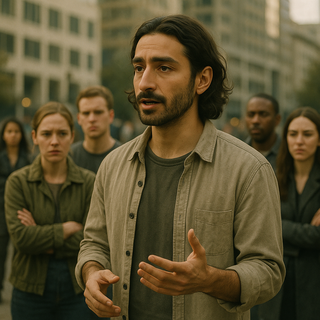
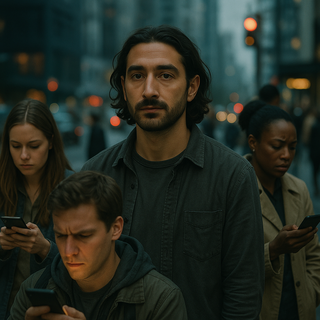
In 2026, Caleb sat at a long table in a noisy neighborhood bistro with six friends. The talk was fast and safe—jokes, updates, small wins. Mina had spent her Saturdays packing groceries for families on their block, but the conversation slid past her like it never happened. Caleb felt the old tug to keep quiet. He knew a sentence that could put a target on him: he could say he thanked God for what she did—or he could hide behind his water glass.

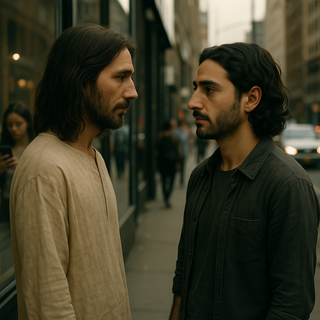
Jesus pulled out the empty chair beside him like He’d been invited all along. He didn’t stage a speech; He leaned close and said, “I lit what’s in you to be seen—for their good, not your credit.” And if it were you at that table, worried about being the “religious one,” would you tuck it back in—or risk one simple, visible good so the thanks goes past you to God? Caleb tapped his fork to the rim, cheeks warm. “Can we pause? Mina carried a lot of neighbors this month. I’m grateful to God for that—and for her.” The table went quiet, then someone started to clap.

The plates still arrived, the laughter returned, the night rolled on. But inside, something real shifted: Caleb wasn’t shrinking to fit the room anymore; the need to blend in had lost the wheel.

#jesus

Read →

Cart Open, Heart Open

In 2026, Keira sat in her car outside a mall with the engine ticking and a flash-sale timer draining seconds on her phone. Her cart was stacked—limited-edition sneakers, a smart lamp, the bag that promised a more put-together version of her life. Buy now, pay later felt like control. Jesus stepped up to the open window, unhurried. "Keira, you are not your cart," he said. "Walk with me. I’ll shape you as we go—people matter more than what you can stack."

Her thumb hovered over Checkout. The numbers, the picture in her head, the old safety of a package on the porch all pulled tight. And if it were you in that seat, with a cart full of little proofs you matter, what would you put down first today so you could step past the safe feeling and actually follow?

Keira closed the app and let the timer die. She didn’t abandon work or family; she just left the parking lot with an empty trunk and room in her day to be available to a person, not a purchase. On the drive home, something real changed: the checkout button wasn’t the boss anymore—the sale banner lost the mic.

#jesus

Read →

Where the Headlines Stop

In 2026, Malik watched another panel argue about his neighborhood from a muted TV bolted in the corner of a twenty-four-hour laundromat. Nobody on that screen had ever waited for the late bus on his block. They called it a dead zone, a lost strip of the city, useful for outrage and not much else. After enough headlines like that, Malik had started saying the same thing about one room in his own life: the apology he owed his sister, the bitterness he kept lit like a hallway bulb, the part of him he only visited in the dark.

Jesus sat beside him on the plastic chair like he belonged there as much as anybody. He did not speak like a pundit or a fixer. “Light does not wait for clean places. Turn toward me here.” And if it were your block, your shame, the corner of your life you had quietly tagged too tangled or too far gone, what would it look like to stop defending the darkness and face the light while it was this near? The washers kept spinning. Jesus had come close before Malik cleaned anything up, and that nearness was exactly why he could turn.

He walked home past the same boarded storefronts and the same hard stories, but he pulled out his phone and sent the message he had delayed for eight months. The neighborhood was still the neighborhood. What changed was the direction of his heart: cynicism was no longer pointing the map.

#jesus

Read →

The Speech She Didn’t Give

In 2026, Hannah sat in her car outside her parents’ house in a quiet suburban street, watching people move past the kitchen window with bowls, foil trays, and easy laughter. Her brother had news. Her sister had photos. Hannah had rehearsed three versions of her own life on the drive over, and every version sounded more impressive than the truth. She kept the engine running a little longer, like a warm car could save her from walking into another room where everyone else seemed further ahead.

Jesus met her in that parked silence, not rushed, not disappointed. He seemed to look straight past the polished lines she was about to use and said, “You do not become loved by arriving with better updates. Start with what is true, and take the next right step.” And if it were you with your hand on the door handle, one polished story ready and one honest one costing you your pride, which would you bring into the room? Some people spend years trying to earn a name that can only be received.

Hannah turned off the car. Inside, she helped set plates, answered simply when her mother asked how she was doing, and let the shiny version of herself stay behind in the driveway. Nothing around the table became perfect, but something real shifted: she was no longer auditioning for a place in the family, and the need to prove she mattered had stopped driving the night.

#jesus

Read →

At 2:13 A.M.

In 2026, Nora was still awake with a therapy app glowing on her phone, the little breathing circle expanding and shrinking like it knew something she didn’t. She had tried the sleep sounds, the body scan, the soft voice telling her to release tension from her jaw. Nothing touched the deeper exhaustion. Her chest felt tight, her thoughts kept sprinting, and underneath all of it sat the same hard belief: if she stopped holding everything together, everything would fall.

Jesus met her there without any harshness in his face, sitting in the dark like he was not offended by tired people. “Nora, you can come to me before you get yourself under control,” he said. “You do not have to carry your life alone to be close to me.” And if it were you at 2:13 a.m., hauling your whole world inside your own head like one mistake would ruin it, what would it look like to hand that weight to someone gentle instead of clenching harder? He was not giving her a trick. He was offering a different way to carry the same life.

Nora still had the same morning coming, the same calendar, the same body that had been running hot for weeks. But she turned the phone facedown and whispered the heavy things out loud anyway. Nothing outside vanished. What changed was the center: she was no longer trying to be her own rescue, and the night stopped feeling like a courtroom.

#jesus

Read →

Mercy at the Far Table

Slack jokes about Owen were still flashing across screens when Jesus crossed the debt-collections floor and stopped at his desk. Glass cubicles, a half-finished spreadsheet, the usual eye-rolls attached to his name. Jesus looked at him and said, "Walk with me." By lunch in 2026, he was sharing fries with Owen and the team the rest of the office treated like a quarantine zone, while compliance stared from a far table, trying to work out why he would sit there on purpose. What changes first: a person’s record, or the moment mercy gets close enough to tell the truth without backing away? Jesus made it plain. Sick people need help, not distance. Nothing in that office was fixed in an hour, and Owen’s past did not vanish with the trays. But shame stopped being the loudest voice in the room. The empty chair at that table became the place where turning began.

#jesus

Read →